INVEST
See where climate action can improve efficiency, resilience and competitiveness.
From climate action to business opportunity
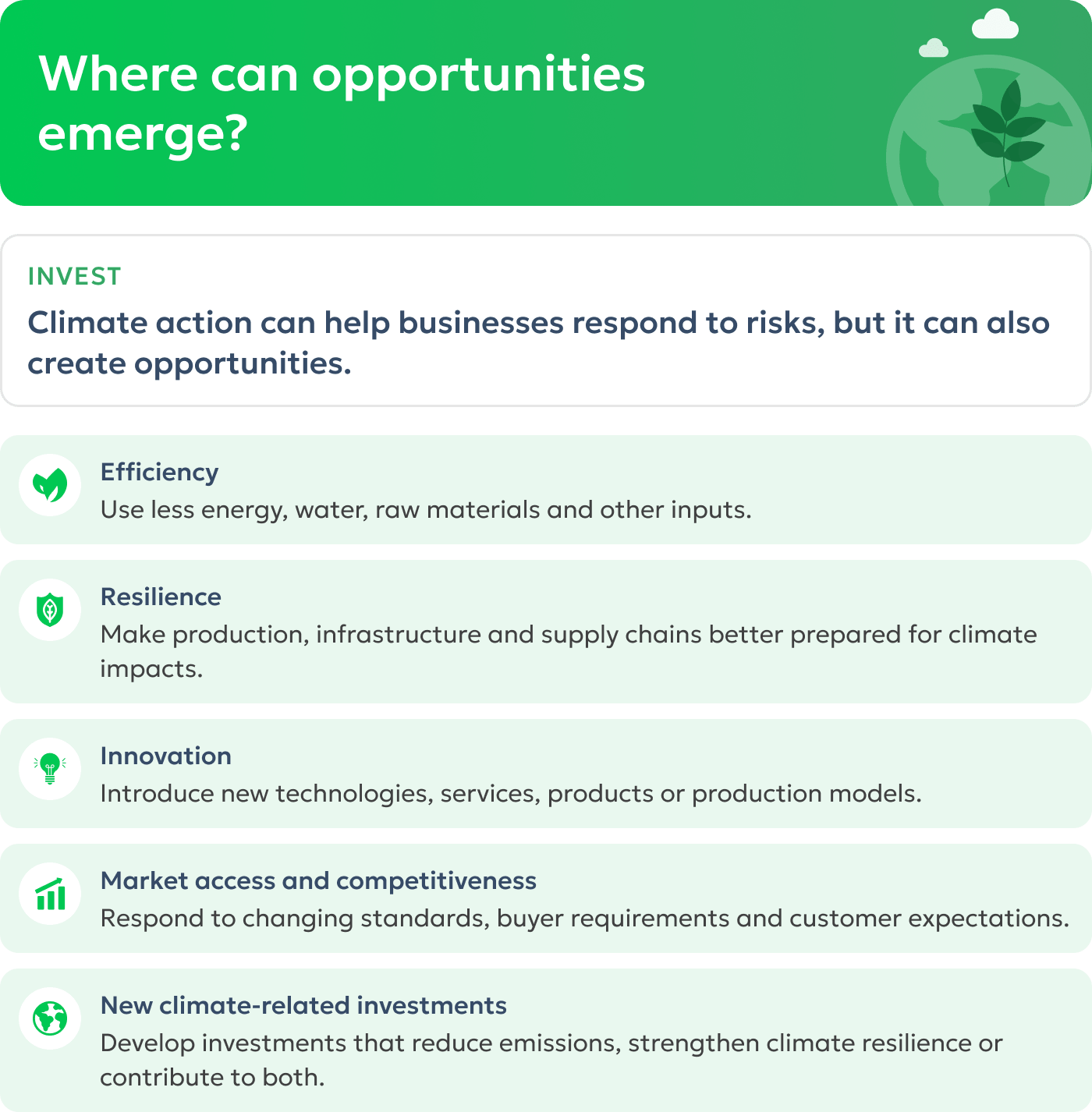
Climate action can help businesses respond to risks, but it can also create opportunities.
Investments that reduce energy and resource use, strengthen resilience, improve production practices or introduce new technologies can contribute to lower operating costs, more reliable production and stronger competitiveness. Climate action may also create opportunities to develop new products and services, enter new markets or respond to changing expectations from customers, investors and business partners.
The AFOLU sectors encompass agriculture, forestry, and land use, and play a unique role in climate change. These sectors are both vulnerable to its impacts and part of the solution. Droughts, high temperatures, changing precipitation patterns, wildfires, and other climate-related impacts can directly affect crop yields, water and raw material availability, forest health, and security of supply. At the same time, the way we produce food and manage land and forests can contribute to reducing emissions and preserving carbon stored in vegetation and soil. Globally, agriculture, forestry, and other land use account for approximately **13–21% of anthropogenic greenhouse gas emissions**, while forests and land also play an important role in removing CO₂ from the atmosphere.
For Montenegro, this relationship is particularly significant, as achieving national climate goals increasingly depends on how investments are made and businesses operate within these sectors.
This also presents significant opportunities for the private sector. Despite its considerable potential, AFOLU still attracts only a very small share of private climate finance. This represents both a challenge and an opportunity: investments in more efficient water and resource use, climate-resilient agricultural production, sustainable forest management, new technologies, and value chains can reduce climate risks while also improving productivity, security of supply, and business competitiveness.